Featured articles are displayed here, which represent some of the best content on English Wikipedia.
Image 1
The frilled lizard (Chlamydosaurus kingii), also known commonly as the frilled agama, frillneck lizard, frill-necked lizard or frilled dragon, is a species of lizard in the familyAgamidae. The species is native to northern Australia and southern New Guinea and is the only member of the genusChlamydosaurus. Its common names refer to the large frill around its neck, which usually stays folded against the lizard's body. The frilled lizard grows to 90 cm (35 in) from head to tail tip and can weigh 600 g (1.3 lb). Males are larger and more robust than females. The lizard's body is generally grey, brown, orangish-brown, or black in colour. The frills have red, orange, yellow, or white colours. (Full article...)
Satellite image of Level Mountain (middle-right) and Heart Peaks (upper-left corner). This image is approximately 80 km (50 mi) east–west.
Level Mountain is a large volcanic complex in the Northern Interior of British Columbia, Canada. It is located 50 kilometres (31 miles) north-northwest of Telegraph Creek and 60 km (37 mi) west of Dease Lake on the Nahlin Plateau. With a maximum elevation of 2,164 metres (7,100 feet), it is the second-highest of four large complexes in an extensive north–south trending volcanic region. Much of the mountain is gently sloping; when measured from its base, Level Mountain is about 1,100 m (3,600 ft) tall, slightly taller than its neighbour to the northwest, Heart Peaks. The lower, broader half of Level Mountain consists of a shield-like structure whereas its upper half has a more steep, jagged profile. Its broad summit is dominated by the Level Mountain Range, a small mountain range with prominent peaks cut by deep valleys. These valleys serve as a radial drainage for several small streams that flow from the mountain. Meszah Peak is the only named peak in the Level Mountain Range. (Full article...)
Gerald Malcolm Durrell (7 January 1925 – 30 January 1995) was a British naturalist, writer, zookeeper, conservationist, and television presenter. He was born in Jamshedpur in British India, and moved to England when his father died in 1928. In 1935 the family moved to Corfu, and stayed there for four years, before the outbreak of World War II forced them to return to the UK. In 1946 he received an inheritance from his father's will that he used to fund animal-collecting trips to the British Cameroons and British Guiana. He married Jacquie Rasen in 1951; they had very little money, and she persuaded him to write an account of his first trip to the Cameroons. The result, titled The Overloaded Ark, sold well, and he began writing accounts of his other trips. An expedition to Argentina and Paraguay followed in 1953, and three years later he published My Family and Other Animals, which became a bestseller. (Full article...)
The common chiffchaff (Phylloscopus collybita), or simply the chiffchaff, is a common and widespread leaf warbler which breeds in open woodlands throughout northern and temperate Europe and the Palearctic. (Full article...)
Image 7
Gevninge helmet fragment
The Gevninge helmet fragment is the dexter eyepiece of a helmet from the Viking Age or end of the Nordic Iron Age. It was found in 2000 during the excavation of a Viking farmstead in Gevninge, near Lejre, Denmark. The fragment is moulded from bronze and gilded, and consists of a stylised eyebrow with eyelashes above an oval opening. There are three holes at the top and bottom of the fragment to affix the eyepiece to a helmet. The fragment is significant as rare evidence of contemporaneous helmets, and also for its discovery in Gevninge, an outpost that is possibly connected to the Anglo-Saxon epic Beowulf. It has been in the collection of the Lejre Museum since its discovery, and has been exhibited internationally as part of a travelling exhibition on Vikings. (Full article...)
The Acra (also spelled Akra, from Ancient Greek: Ἄκρα, Hebrew: חקרא ,חקרהḤaqra(h)), meaning "stronghold" (see under "Etymology"), was a location in Jerusalem thought to have contained a fortified compound built by Antiochus Epiphanes, ruler of the Seleucid Empire, following his sack of the city in 168 BCE. The name Acra was also used at a later time for a city quarter probably associated with the by-then destroyed fortress, known to Josephus (first century CE) as both Acra and "the lower city". The fortress played a significant role in the events surrounding the Maccabean Revolt, which resulted in the formation of the Hasmonean Kingdom. The "upper city" was captured by Judas Maccabeus, with the Seleucid garrison taking refuge in the "Acra" below. The task of destroying this last enemy stronghold inside Jerusalem fell to Simon Maccabeus surnamed Thassi. Knowledge about the Acra is based almost exclusively on the writings of Josephus, which are of a later date, and on the First and Second Books of Maccabees, which were written not long after the described events. (Full article...)
The black currawong (Strepera fuliginosa), also known locally as the black jay, is a large passerinebirdendemic to Tasmania and the nearby islands within the Bass Strait. One of three currawong species in the genus Strepera, it is closely related to the butcherbirds and Australian magpie within the family Artamidae. It is a large crow-like bird, around 50 cm (20 in) long on average, with yellow irises, a heavy bill, and black plumage with white wing patches. The male and female are similar in appearance. Three subspecies are recognised, one of which, Strepera fuliginosa colei of King Island, is vulnerable to extinction. (Full article...)
The nuthatches (/ˈnʌthætʃ/) constitute a genus, Sitta, of small passerinebirds belonging to the family Sittidae. Characterised by large heads, short tails, and powerful bills and feet, nuthatches advertise their territory using loud, simple songs. Most species exhibit grey or bluish upper parts and a black eye stripe. (Full article...)
The hoopoe starling (Fregilupus varius), also known as the Réunion starling or Bourbon crested starling, is a species of starling that lived on the Mascarene island of Réunion and became extinct in the 1850s. Its closest relatives were the also-extinct Rodrigues starling and Mauritius starling from nearby islands, and the three apparently originated in south-east Asia. The bird was first mentioned during the 17th century and was long thought to be related to the hoopoe, from which its name is derived. Some affinities have been proposed, but it was confirmed as a starling in a DNA study. (Full article...)
Image 12
Breeding plumage
The red-necked grebe (Podiceps grisegena) is an aquatic bird found in the temperate regions of the northern hemisphere. A migratory bird, its wintering habitat is largely restricted to calm waters just beyond the waves around ocean coasts, although some birds may winter on large lakes. Grebes prefer shallow bodies of fresh water such as lakes, marshes or fish-ponds as breeding sites. (Full article...)
Image 13
The blue whale (Balaenoptera musculus) is a species of baleen whale and the largest marine mammal in the rorqual family Balaenopteridae. Reaching a maximum confirmed length of 29.9–30.5 m (98–100 ft) and weighing up to 190–200 t (190–200 long tons; 210–220 short tons), it is the largest animal known to have ever existed. The blue whale's long and slender body can be of various shades of greyish-blue on its upper surface and somewhat lighter underneath. Four subspecies are recognized: B. m. musculus in the North Atlantic and North Pacific, B. m. intermedia in the Southern Ocean, B. m. brevicauda (the pygmy blue whale) in the Indian Ocean and South Pacific Ocean, and B. m. indica in the Northern Indian Ocean. There is a population in the waters off Chile that may constitute a fifth subspecies. (Full article...)
Image 14
Planetary symbol for Haumea (mostly astrological) (Full article...)
... that Na drugą planetę, published in 1895 as one of the earliest Polish science-fiction novels, was later criticized by communist-era censors for its perceived "adoration for America"?
... that gender-neutral grammatical forms used by some non-binary people in Poland originated from a science fiction novel about posthumans and are named after its author?
This portal needs to be updated. Please help update this portal to reflect recent events or newly available information. Relevant discussion may be found on the talk page.
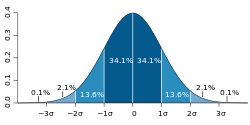
Many naturally occurring phenomena approximate a normal distribution.
Complete requests of other editors on the talk pages of science-related articles (examples)
Expand 2026 in science and/or other articles for science-related topics of the year (in the box on the right)
Create new articles for items of this article, mostly articles relating to new scientific fields/topics/findings (the page does not use redlinks anymore but you will quickly identify possible new articles when reading it; here you can find a version with over 60 redlinked examples)
Some of the lists' items have not yet been integrated into their wikilinked articles; if you add a study there it should also be relevant to at least one other article
Find studies published under a compatible open license (like CC BY 4.0) and upload the studies' images with descriptions from the study and add these images to articles if they are relevant and useful there
When a study with a useful image is published under an incompatible or unclear license (or the image is published not in a study but elsewhere), you could contact its authors (Twitter/Mail) and ask them to give you the permission to upload them under CC BY 4.0 (or whether they could upload the image/s under a compatible license)
You can also think about whether images would be useful as you read a science-related article and then search for such images:
if they already exist add them (if already on WMCommons) or upload them (if the license is ok) or ask their authors for permissions
Sci-Hub is a shadow library that provides free access to millions of research papers, regardless of copyright, by bypassing publishers' paywalls in various ways. Unlike Library Genesis, it does not provide access to books. Sci-Hub was founded in Kazakhstan by Alexandra Elbakyan in 2011, in response to the rising costs of research papers behind paywalls. The site is extensively used worldwide. In September 2019, the site's operator(s) said that it served approximately 400,000 requests per day. In addition to its intensive use, Sci-Hub stands out among other shadow libraries because of its easy use and reliability, as well as the enormous size of its collection. A 2018 study estimated that Sci-Hub provided access to almost all scholarly publications. On 15 July 2022, Sci-Hub reported that its collection comprised 88,343,822 files. In December 2020, the site paused uploads due to legal troubles. Since then, the site has archived a much lower fraction of new articles. (Full article...)
A plot of normal distribution (or bell-shaped curve) where each band has a width of 1 standard deviation – See also: 68–95–99.7 rule. In statistics, the standard deviation is a measure of the amount of variation of the values of a variable about its average. A low standard deviation indicates that the values tend to be close to their average (also called the expected value or arithmetic mean) of the set, while a high standard deviation indicates that the values are spread out over a wider range. Standard deviation may be abbreviated SD or std dev, and is most commonly represented in mathematical texts and equations by the lowercase Greek letterσ (sigma). (Full article...)
In biology, taxonomy (from Ancient Greekτάξις (taxis)'arrangement' and -νομία (-nomia)'method') is the scientific study of naming, defining (circumscribing) and classifying groups of biological organisms based on shared characteristics. Organisms are grouped into taxa (singular: taxon), and these groups are given a taxonomic rank; groups of a given rank can be aggregated to form a more inclusive group of higher rank, thus creating a taxonomic hierarchy. The principal ranks in modern use are domain, kingdom, phylum (division is sometimes used in botany in place of phylum), class, order, family, genus, and species. The Swedish botanist Carl Linnaeus is regarded as the founder of the current system of taxonomy, having developed a ranked system known as Linnaean taxonomy for categorizing organisms. (Full article...)


 Featured articles are displayed here, which represent some of the best content on English Wikipedia.


_(8692622586).jpg)

.jpg)


_breeding_adult_Gronjordssoen.jpg)

.svg)
.svg)

 Animation of a water drop, by Chris 73 and Gmaxwell (from Wikipedia:Featured pictures/Sciences/Others)

 Toroid magnets of the ATLAS detector, by Maximilien Brice, CERN (edited by Bammesk) (from Wikipedia:Featured pictures/Sciences/Others)
 Archaeological excavation at Atapuerca Mountains, by Mario modesto (from Wikipedia:Featured pictures/Sciences/Others)
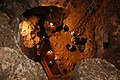 Archaeologists prospecting Santa Ana Cave at Excavation (archaeology), by Mario modesto (from Wikipedia:Featured pictures/Sciences/Others)
 Parallax, by Mila Zinkova (edited by Richard Bartz) (from Wikipedia:Featured pictures/Sciences/Others)

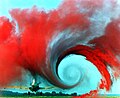 NASA study on wingtip vortices at Wake turbulence, by Langley Research Center (edited by Fir0002) (from Wikipedia:Featured pictures/Sciences/Others)
 Color cathodoluminescence of a diamond, by Pavel.Somov (from Wikipedia:Featured pictures/Sciences/Others)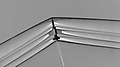
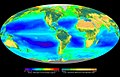 Global oceanic and terrestrial photoautotroph abundance at Primary production, by SeaWiFS Project (from Wikipedia:Featured pictures/Sciences/Others)
 Vibrating glass beam at Euler–Bernoulli beam theory, by Ben pcc (from Wikipedia:Featured pictures/Sciences/Others)

 Section of the Large Hadron Collider, by Maximilien Brice (from Wikipedia:Featured pictures/Sciences/Others)
 Peruvian Andes at United States Exploring Expedition, by Alfred Thomas Agate (edited by Durova) (from Wikipedia:Featured pictures/Sciences/Others)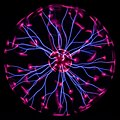
 Translational motion at Thermodynamic temperature, by Greg L (from Wikipedia:Featured pictures/Sciences/Others)
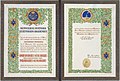 Nobel Prize in Physics diploma, by Sofia Gisberg (restored by Jebulon) (from Wikipedia:Featured pictures/Sciences/Others)
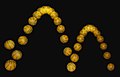 Projectile motion of a bouncing ball at Inelastic collision, by MichaelMaggs (from Wikipedia:Featured pictures/Sciences/Others)
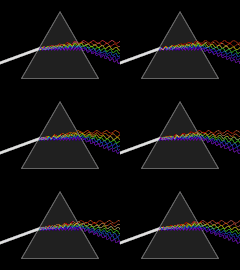

 Simulation of liquids with different viscosities, by Synapticrelay (from Wikipedia:Featured pictures/Sciences/Others)
 Drop impact on a liquid surface, by José Manuel Suárez (from Wikipedia:Featured pictures/Sciences/Others)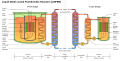

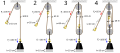 Mechanical advantage device, by Prolineserver (edited by Tomia, Ss181292 and Atropos235) (from Wikipedia:Featured pictures/Sciences/Others)


_-_Climate_Lab_Book_(Ed_Hawkins).png)


.png)
.jpg)


 Vital articles to understand Science.




.svg)
.svg)

.svg)

.jpg)


